
گرایش مهندسی سازههای هیدرولیکی - civeng دانشکده مهندسي عمران
Hydraulic Structures Engineering Division
Objectives and Overview of the Master’s Program
1. Definition
The master’s program is an educational and research-oriented level of higher education. It includes theoretical, practical, and laboratory courses, as well as a research component, aimed at enhancing the knowledge of civil engineering specialists and providing the foundation needed to understand and advance the current frontiers of technology and practice in this field.
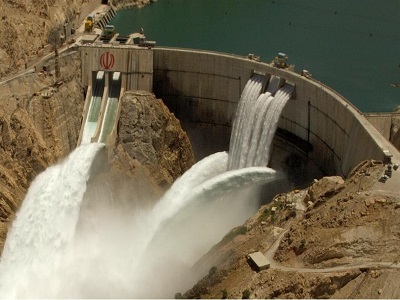
The Civil Engineering – Water Engineering and Hydraulic Structures program is one of the master’s and doctoral branches in civil engineering.
This specialization focuses on the theoretical, design, and construction aspects of hydraulic structures. Therefore, its curriculum is structured to provide students with a combination of design skills and managerial–executive competencies.
2. Objective
The goal is to train individuals capable of designing and supervising specialized projects related to this field.
Specifically, the program aims to develop professionals who, with adequate understanding of various engineering, managerial, and executive aspects, can evaluate existing infrastructures for water-resource utilization and take part in various stages of design, execution, or client-side project management.
Objectives and Overview of the Ph.D. Program
Definition
The Ph.D. program in Civil Engineering – Water Engineering and Hydraulic Structures is the highest academic degree in this field. It consists of two independent phases: coursework and research, and it culminates in the defense of a doctoral dissertation.
1. Objective
The doctoral program aims to train individuals who can innovate in the research domains related to water engineering and hydraulic structures, contributing to the expansion of scientific frontiers and addressing national needs. This program is a coordinated set of educational and research activities, where the main scientific pathway—depending on the topic—may include theoretical research, experimental research, or a combination of both. Education is intended to fill the candidate’s knowledge gaps and facilitate progress toward research objectives.
The Ph.D. program seeks to ensure that candidates master significant scientific works in a specific area of civil engineering and achieve one or more of the following goals:
-
Acquiring knowledge of advanced research methods and pursuing innovation in the field
-
Attaining the latest scientific, research, and technological foundations
-
Innovating in scientific and research areas, contributing to the advancement and expansion of knowledge
-
Gaining mastery in one or more of the following domains:
-
Teaching, research, and academic planning
-
Design, execution, supervision, and evaluation
-
Analysis and resolution of scientific problems at the frontier of knowledge
-
Solving practical societal challenges within civil engineering
-